Cabinet Finishes Explained for Austin Kitchens: Paint, Stain, Thermofoil and Melamine
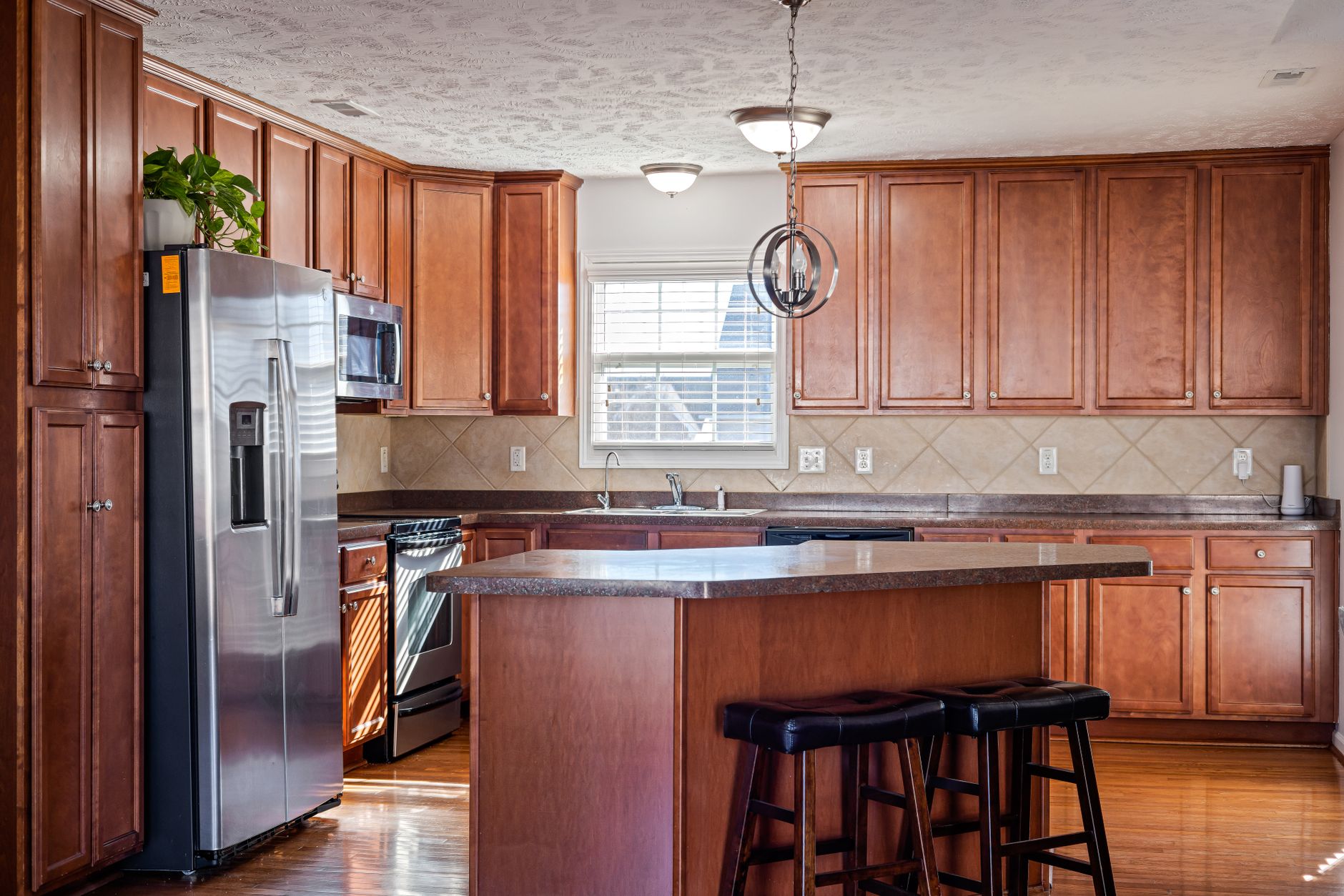
Finish is the part of a cabinet that everyone sees and almost nobody asks about. Paint, stain, clear coat, thermofoil and melamine all do the same basic job, which is to keep moisture and grease out of the material underneath, but they do it in different ways and fail in different ways. In Austin, where the air swings between wet and dry through the year and kitchens spend months being cooled hard, the finish on a cabinet works harder than it would in a steadier climate. These are the questions that come up most often when a homeowner is deciding what goes on the wood.
What is the difference between painted and stained cabinet doors?
A stained door shows the grain of the wood, so the species matters. Oak has an open, pronounced grain. Maple is tight and smooth. Birch sits between them and takes stain a little unevenly. Painted doors hide the grain, and the surface under the paint can be hardwood, MDF or a plywood panel. Both finishes are protective, but paint forms a thicker film that can crack at the joints between rails and stiles when the wood moves, and a hairline crack along a joint is the most common complaint about painted doors.
A stained and clear coated door shows movement less, because the finish sits thinner and follows the wood. A well made painted door in MDF moves very little and holds a flat, clean line. Painted solid wood is more likely to show a seam as the seasons change. The choice is a mix of look and tolerance, not a ranking of quality.
Does it matter how many sides of a door are finished?
It matters more than almost anything else about the finish. Wood exchanges moisture through every unsealed face. If the front is coated and the back is bare, the back takes on moisture in humid weather and lets it go in dry weather while the front stays put, and the door curves. A properly finished door has a coat on the front, back, edges and inside the groove where the panel sits. Cabinet shops that spray both faces and every edge see far fewer warped doors than shops that finish only what shows.
What are thermofoil and melamine, and where do they work?
Thermofoil is a vinyl film heated and pulled over a shaped MDF door. It makes a seamless painted looking surface with no joints to crack. Its weak point is heat and moisture at the edges. A door next to an oven, a toaster or a dishwasher vent can have its film lift over time, and once an edge begins to peel it keeps going.
Melamine is a resin soaked paper fused onto particleboard or MDF. It is common on cabinet interiors and on drawer boxes. A melamine surface resists spills and wipes clean, which is why it makes a good lining for the inside of a box. The weakness is the cut edge. Where the paper stops and the board begins, edge banding has to seal the joint, or water finds its way in and the board swells.
How should the inside of a cabinet be finished?
The inside of a box gets less attention than the outside and takes more abuse. Spray bottles leak, a bag of flour tears, and a damp dish towel hangs on the door. An interior in melamine or a prefinished plywood with a clear coat can be wiped, and the finish keeps moisture from reaching the core. A bare plywood interior is not wrong, but it will stain, and unfinished particleboard is a poor choice anywhere near water.
The sink base deserves a second look. Sealing the floor, the lower edges of the sides and the seam where the floor meets the back wall with a flexible coating gives the box a better chance if a leak starts. Some shops line the floor with a waterproof mat as well, which catches a drip and makes it visible quickly.
Why do toe kicks swell, and what prevents it?
The toe kick is the recessed panel at the base of a cabinet run. It sits within an inch or two of the floor, so every mop, spill and splash reaches it. When the kick is built from the same material as the box and left with an unsealed lower edge, water wicks upward and the panel swells and bubbles. Building the kick from plywood, sealing every edge, and holding it a small distance off the floor lets it dry between washings. On a slab floor in a kitchen with a dishwasher, that small gap makes a difference over time.
How do humidity swings affect the finish itself?
Finish does not stop wood from moving. It slows the exchange of moisture, so the wood moves more gradually and more evenly. A film finish like paint or a catalyzed varnish builds a barrier on the surface. A penetrating oil soaks in and leaves less film. In Austin, where summers are long and hot and the house is dry from air conditioning, a coat that is applied evenly on every face and cured fully before the door is hung will resist cracking at the joints.
Curing matters more than people expect. A coat that feels dry to the touch may need days to harden fully. Doors boxed and delivered too early can stick together or take marks from the packing, and a soft finish picks up fingerprints and cleaner residue for years. A shop that gives each coat its full time before the next one goes on tends to deliver a harder, more even surface.
Can an old finish be refreshed instead of replaced?
Often it can. A sound box with doors that have only worn at the finish is a good candidate for refinishing. The surface is cleaned to remove grease, scuffed so the new coat bonds, and then sprayed or brushed with fresh finish. Refacing goes a step further and swaps the doors and drawer fronts for new ones on the existing boxes, which makes sense when the carcasses are in good shape and the layout still works.
Neither method fixes a failing box. If the sink base floor is soft, if the back panel has pulled away, or if the shelves have sagged, the finish is not the problem, and new doors will hang on a weak structure. A quick inspection of the inside before choosing between refinishing, refacing and replacing saves a lot of regret.
What should be asked before choosing a finish?
- What is the door made of underneath, solid wood, plywood or MDF?
- Is every face and edge of the door finished, including the back and the groove?
- How many coats go on, and how long does each one cure before the next?
- What seals the cut edges of the box, especially at the sink base and toe kick?
- Is the interior finished to the same standard as the outside?
The answers show quickly whether a shop treats the finish as a coat of color or as a working part of the cabinet.
What is the short answer?
A good finish is thin enough to move with the wood, applied on every face, and given time to cure. Choose the look that suits the room, then check the edges, the interior and the sink base, because that is where Austin kitchens tend to show their age first.